Headlee Override Information

A community college isn't just a campus—it is part of the fabric of the communities it serves. Discover how the College serves students, employers, and community members across its service area, and learn more about the Headlee Override Proposal that voters in Beaverton, Clare, Farwell, Gladwin, Harrison, and Mt. Pleasant school districts will see on the November ballot.
Headlee At-a-Glance
Voters within Mid’s service area will consider a Headlee Override Proposal that would restore the College’s voter-approved operating millage rate to 1.5 mills. The proposal would help sustain the programs, services, and learning environments that support students, employers, and communities across our region.
- Mid Michigan College is asking voters to restore its original 1.5 millage rate. The Headlee Amendment has reduced Mid’s millage to 1.2071 mills.
- Restoring the millage will add 0.2929 mills. This costs only $0.29 per $1,000 of taxable property value—but it results in over $1.3 million in funding for the College.
- This funding supports education and services that are important to our local communities.
- Without this vital funding, programs can’t grow, services may be cut, community impact suffers, and Mid’s long-term stability is at stake.
- Millages are assessed based on Taxable Value, which is lower than a property's Market Value or State Equalized Value. Mid’s millage is assessed annually, meaning the increase for most homeowners is about $2 per month.
Remember to Vote November 3!
First Day to Vote via Absentee Ballot is September 24
Check Your Voter Registration Status, Find Polling Locations, & More via the State of Michigan Voter Information website.
Your Community College
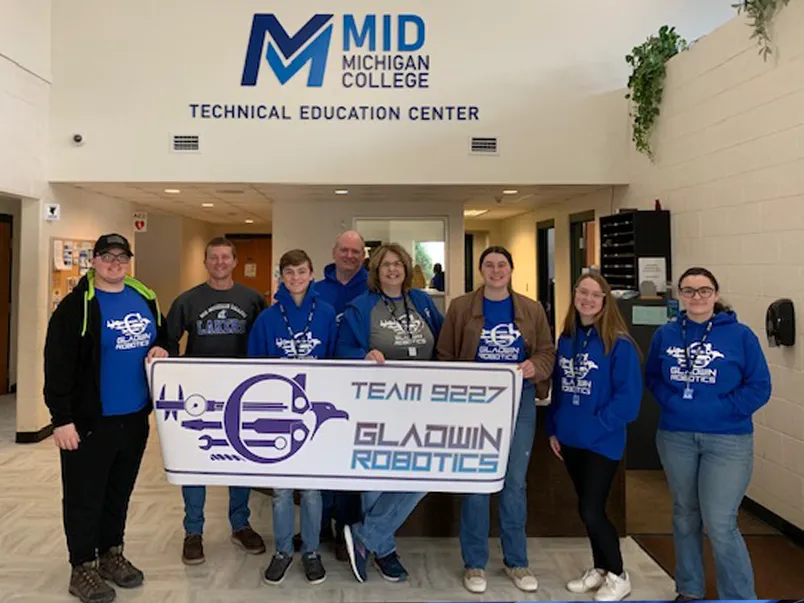
From Mid's President...
"In all of our efforts, we remain focused on the students and communities we serve and collaborate with," shared Scott Mertes, President of Mid Michigan College. "And we do that because they make us who we are—dedicated, determined, and driven to help others succeed."
Mid serves students and communities through career-ready degrees, transfer-focused university partnerships, short-term trainings, personal-interest classes, and more. For students, this includes access to support services that help students stay on track, overcome challenges, and complete their education. For the broader community, Mid provides spaces, sponsorships, and outreach that support workforce development, lifelong learning, and community engagement.
The College continues to invest in upgrades to our Health Science Labs, adding advanced simulation equipment to ensure our students train in environments that reflect real-world settings.
- Healthcare Programs include Nursing, Radiography, Medical Assistant, Certified Nursing Assistant, Phlebotomy, and Physical Therapist Assistant.
- Upgrades in both Harrison and Mt. Pleasant directly impact the quality of care in our local communities by providing local healthcare providers with highly-skilled, patient-centered professionals.
- Mid's Health Sciences Department employs experienced faculty who live and work right here—close to home and campus.
State-of-the-art labs and technical education centers on both the Harrison and Mt. Pleasant Campuses ensure students have access to cutting-edge technologies and hands-on experiences that prepare them for the workforce.
- The Morey Technical Education Center in Mt. Pleasant was recently renovated to launch the Advanced Manufacturing Lab and expand the Welding Lab to host more students.
- The Harrison Campus Welding Lab was upgraded this past year to include new technologies and an additional classroom, giving students and instructors new opportunities to collaborate.
- Programs like CAD, HVAC, and Machine Tool have seen technology upgrades to better align with industry standards like 3D Printing, digital systems, and CNC operations.
The College continues to demonstrate its commitment to serving students and the community through meaningful outreach and connections.
- Dual Enrollment gives students the opportunity to take college courses while they are still in high school—a great way to get a jump start on their goals.
- Students get help overcoming obstacles through Mid's Student Emergency Fund, along with Counseling & Wellness resources, including the College's on-campus food pantry.
- Military-connected students and their families receive dedicated support and may utilize Mid's Veterans Resource Centers to connect and collaborate.
- The College works with partners to inform and support local K-12 students and families about important issues and available opportunities.
Mid provides services and spaces that support, inspire, and encourage.
- Local businesses and entrepreneurs can receive assistance at every stage of their growth with the SBDC on the Mt. Pleasant Campus.
- Fitness and Recreation Facilities
- Walking, Biking, and Disc Golf Trails
- Meeting Rooms and Conference Spaces
- Lifelong Learning and Community Education
- Community Events, Outreach Programs, and Educational Partnerships with Local Schools



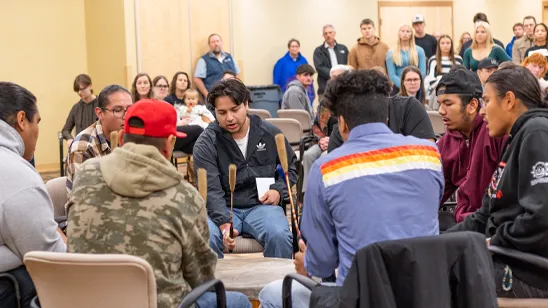




Who Are Mid Students
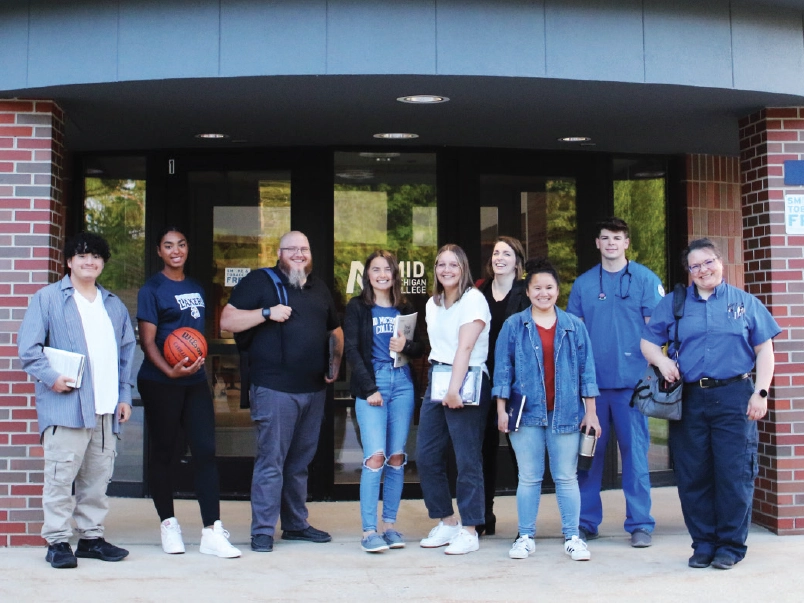
They Are Your Family, Friends & Neighbors
They are you and people just like you who live in your community. Students at Mid include recent high school graduates, adult learners, career changers, and individuals pursuing new or advanced opportunities.
Many students who attend Mid live and work in the same communities the College serves, contributing to the local workforce in healthcare, manufacturing, public service, education, and other essential fields.










What is Headlee?
What is the proposal?
The Headlee Amendment requires millage rates to be reduced when property values increase faster than inflation.
A Headlee Override is a voter decision to restore a millage rate to the level previously approved by voters.
- Voters originally approved a millage rate of 1.5 mills for Mid Michigan College in 1965.
- Over time, Headlee reductions have lowered the current rate to 1.2071 mills, the second-lowest community college millage in the state.
- Restoring the millage will add 0.2929 mills. This costs only $0.29 per $1,000 of taxable property value—but it results in over $1.3 million in funding for the College.
What does this mean?
Millages are assessed based on Taxable Value, which is lower than a property's Market Value or State Equalized Value. Mid’s millage is assessed annually, meaning the increase for most homeowners is about $2 per month.
If approved, the difference between the current rate (1.2071 mills) and the original voter-authorized rate (1.5 mills) would be approximately $0.29 per $1,000 of taxable value annually.
It's important to understand different home values when estimating the impact of this proposal.
- Market Value | Market value is the estimated price a property could sell for in the current real estate market. For example, a home might have a market value of $250,000 because that's what similar homes are selling for.
- Taxable Value | Taxable value is the value used to calculate property taxes. It is determined according to Michigan property tax laws and is often lower than market value. For example, a home with a market value of $250,000 might have a taxable value of $125,000.
- Property taxes, including millages, are applied to the taxable value, not the market value.
For illustrative purposes, examples below show a range of typical taxable values across the College’s service area. Taxable value varies by property and may differ significantly from market value due to Michigan property tax laws, exemptions, and assessment limits.
| Example Market Value | Approximate Taxable Value | Estimated Annual Difference |
|---|---|---|
|
$100,000 |
$50,000 |
$14.40 |
|
$150,000 |
$75,000 |
$21.59 |
|
$200,000 |
$100,000 |
$28.79 |
|
$250,000 |
$125,000 |
$35.99 |
Learn More
Over time, the Headlee Amendment has automatically reduced Mid Michigan College’s millage rate as inflation has grown faster than property values. The proposal on the November ballot provides voters with the opportunity to consider whether to restore the millage rate to the level originally approved.
This proposal will appear on ballots in the Beaverton, Clare, Farwell, Gladwin, Harrison, and Mt. Pleasant school districts. These districts make up Mid Michigan College’s in-district service area.
Residents within these districts support College operations through local property taxes and are eligible for Mid Michigan College’s in-district tuition rate, which represents a savings of nearly 40 percent compared to out-of-district tuition.
In addition, residents of the service area may serve on the College’s Board of Trustees.
No. The proposal restores the rate to the previously approved maximum of 1.5 mills.
Over time, the Headlee Amendment may adjust millage rates again based on changes in property values and inflation.
Mid Michigan College has a funding structure that differs from many other community colleges in Michigan.
Like all public community colleges, Mid is funded through a combination of local property tax revenue, tuition and fees, and state support. The balance of these revenue sources varies by institution across the state.
Mid receives a lower share of its total revenue from local property taxes compared to most Michigan community colleges and relies more heavily on tuition and fees.
As a result, Mid operates with lower total revenue per student compared to the state average. The College also maintains lower-than-average operating expenditures per student when compared to other Michigan community colleges.
Across the state, funding models vary widely, and these differences influence both revenue levels and spending capacity among institutions.
Of 28 Michigan community colleges
- Mid Michigan College collects the second-lowest tax revenue per Fiscal Year Equated Student (FYES)
- Mid is among the most tuition-dependent institutions in the state
- Mid operates with one of the lower expenditure levels per FYES compared to peer colleges
- At approximately $2,500 per FYES in local tax revenue, Mid collects the third-lowest amount in the state—significantly below the state average and below many neighboring community colleges.
- Alpena Community College $3,499.57
- Delta College $5,104.90
- Lansing Community College $8,415.45
- Kirtland Community College $10,571.11
- West Shore Community College $12,094.51
Data source: Michigan Community College Data Inventory Report (2024–2025), Michigan School Data.
The millage would remain at its current reduced rate of 1.2071 mills and would not be restored to the voter-approved rate of 1.5 mills.
For more information about the Headlee Override proposal, contact Matt Miller, Vice President of Student Services, at mmiller@midmich.edu or (989) 386-6622 x600.
Official Ballot Language
CHARTER MILLAGE PROPOSAL
This proposal would restore Mid Michigan College's original millage, which has been reduced by the Headlee Amendment, and allow the college to levy on all taxable property the millage previously approved by the voters of the community college district.
Shall the limitation on the total amount of taxes which may be assessed against all taxable property within the community college district of Mid Michigan College, Michigan, be increased by 0.2929 mill ($0.2929 on each $1,000 of taxable value) in perpetuity to provide funds for all authorized charter millage purposes specified within the power of the college’s board of trustees; the estimate of the revenue the college will collect if the millage is approved and levied in 2027 is approximately $1,307,848 from the local taxes authorized in this proposal?